Hardware Insights
-
Mar. 24, 2026 / Hardware Insights
Your RTX Pro 6000 Blackwell Does Not Support FlashAttention-4
If you bought an RTX Pro 6000 Blackwell expecting full Blackwell support for local LLM inference, you will not get FlashAttention-4. That kernel only runs on datacenter Blackwell GPUs like NVIDIA B200 and on NVIDIA H100. Even though the branding says “Blackwell”, the underlying hardware is different in a way that directly affects inference performance....

-
Mar. 19, 2026 / Hardware Insights
This Desktop Machine Runs 1T Parameter LLMs Locally
The NVIDIA DGX Station built around the GB300 Grace Blackwell Ultra is not just another workstation with a big GPU. It is closer to a single-node inference server designed around one idea: remove the boundary between VRAM and system RAM while keeping GPU compute in control. You get 252 GB of HBM3e at 7.1 TB/s...
-
Feb. 26, 2026 / Hardware Insights
How Memory Chips Determine GPU Memory Bandwidth for Local LLM Inference
If you are running quantized LLMs locally, especially 4-bit models, memory bandwidth usually matters more than raw CUDA core count. Once the model fits in VRAM, inference speed is largely determined by how fast the GPU can stream weights from VRAM into the tensor cores. For 7B models this is less obvious. For 34B, 70B,...

-
Feb. 26, 2026 / Hardware Insights
Qwen3.5 27B and Qwen3.5 35B: What Hardware Do You Actually Need? (GPU Benchmarks Inside)
Qwen3.5 27B fits comfortably on a 24 GB GPU up to 131k context in 4-bit, but becomes memory heavy at 262k. Qwen3.5 35B MoE in 4-bit is the more practical long-context model for 24 GB cards, and it is significantly faster in token generation despite having more total parameters. VRAM is still the main constraint,...

-
Feb. 4, 2026 / Hardware Insights
Qwen3 Coder Next 80B A3B: what it takes to run it locally
Direct answer first: Qwen3 Coder Next 80B A3B is one of the most hardware-friendly 80B-class coding models released so far. Thanks to its MoE design with roughly 3B active parameters, a single high-VRAM GPU can run it at full 256k context, and even dual consumer GPUs can handle the 3-bit version comfortably. VRAM, not raw...
-
Jan. 26, 2026 / Hardware Insights
Best Computers for Running ClawdBot (OpenClaw) AI Assistant Locally
If you are running OpenClaw with a cloud model like Claude Opus, you do not need powerful hardware. Any modern low power system with 8 GB of RAM and a 6th+ gen Intel CPU is enough. If you want to run ClawdBot fully local with reliable tool usage and large context windows, hardware requirements scale...

-
Jan. 22, 2026 / Hardware Insights
We Tested GLM-4.7 Flash 30B MoE — Here’s the GPU You Actually Need
Z.ai released GLM 4.7 Flash only a few days ago, but meaningful local testing had to wait. The initial llama.cpp support was incomplete, and without proper fixes it was not possible to measure real performance. Those fixes have now landed, and with the latest llama.cpp build we were finally able to test the model properly...
-
Jan. 20, 2026 / Hardware Insights
How I Test GPUs for Local LLMs Before I Buy One
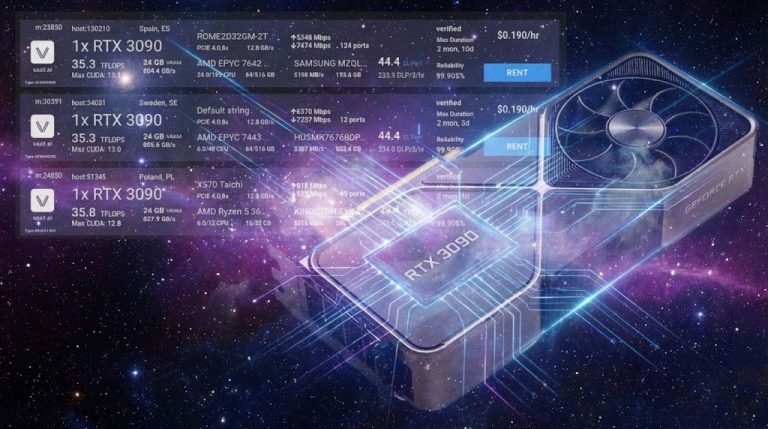
Learn how I test GPUs for local LLM inference before buying, using real workflows, llama.cpp, and rented RTX 3090 instances to measure VRAM, context length, and performance.
-
Jan. 19, 2026 / Hardware Insights
Ryzen AI Halo Is Not New Hardware – It’s AMD’s Strix Halo AI Developer Platform
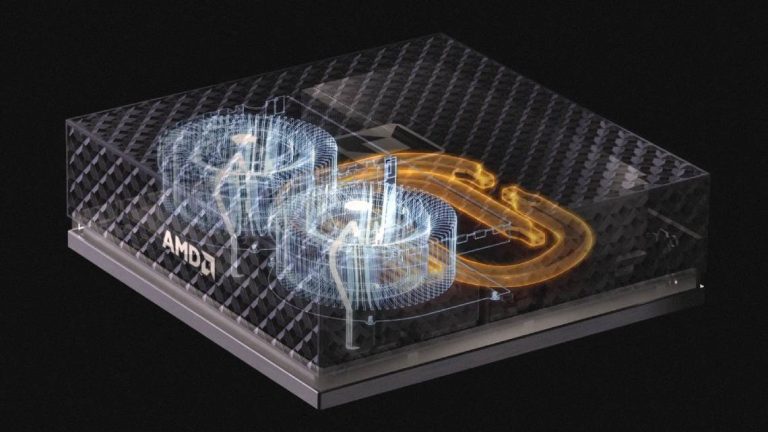
AMD Ryzen AI Halo is being marketed as a new local AI development solution, but it is important to be precise about what it actually is. Ryzen AI Halo does not introduce new silicon, new performance characteristics, or a faster variant of Strix Halo. It is a reference mini PC platform built around the already...