Dell Pro Slim QCS1250 vs. Dell Pro Tower QCT1250
Comparison and Differences
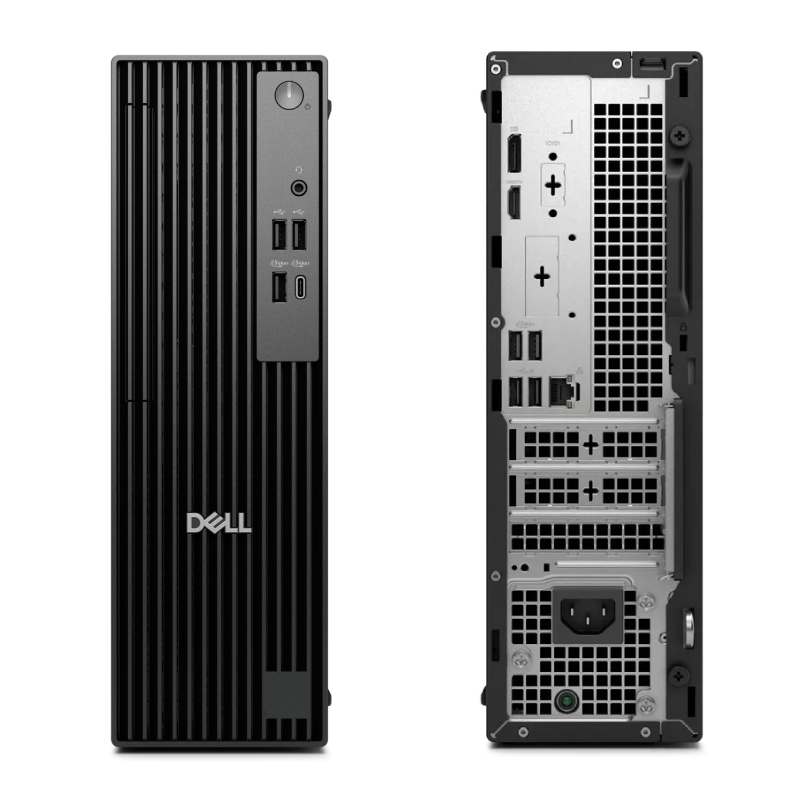
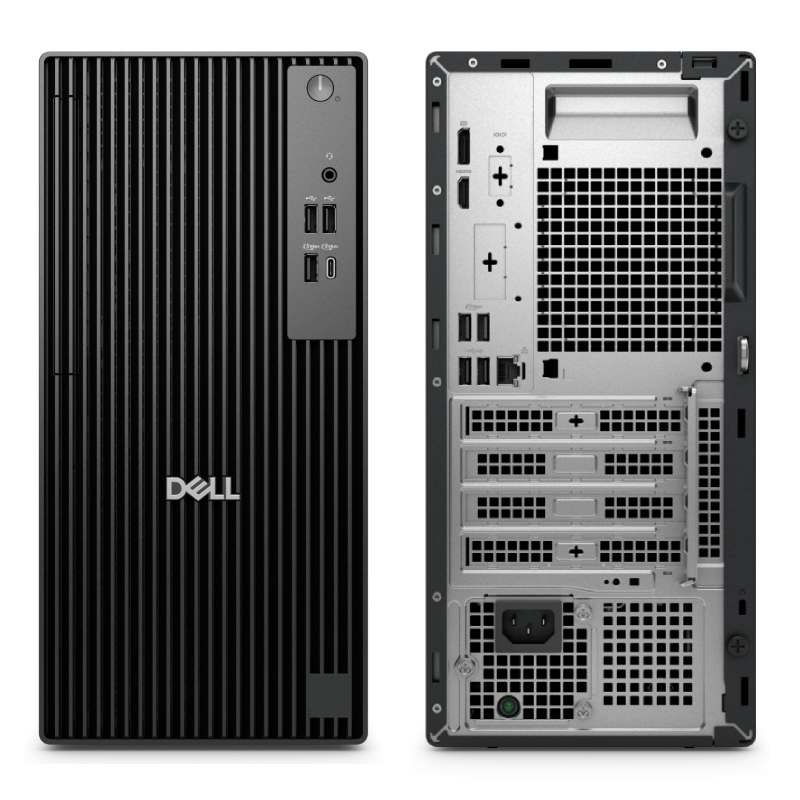
Differences between Dell Pro Slim QCS1250 and Dell Pro Tower QCT1250
Both computers, the Dell Pro Slim QCS1250 and the Dell Pro Tower QCT1250, were released during the same year - 2025.
If you are looking for the smaller form factor the Dell Pro Slim QCS1250 is the right one for you. It is smaller than the Dell Pro Tower QCT1250 and will fit more easily under your desk.
Processor
The two models have the same generation of Intel processors. We think that the 16 generation of Intel Processors have enough power to execute all of the home and office tasks that most people will care to do.
Memory
Both models have have equal amount of ram slots (2 RAM). Usually two RAM slots are more than enough for most cases. However, the count should be taken into account when planning how much and what combination of RAM you are going to need for your system.
None of the desktops has an advantage when it comes to the speed of the RAM being used. Both models support RAM speeds of up to 6400. In addition, you will be able to install the same amount of RAM in both models, and most probably 64 GB of RAM will be enough for most people. However, if you will be needing more RAM, make sure to check other desktop models too.
Ports
Both models have the same amount of USB ports for total count of 8. If this is not enough, using a USB hub is always a viable option. None of the desktop models has a USB 3.1 port (10Gb/s), so if you need a fast connection to your peripherals, like external Solid State Drive, you will need to look elsewhere.
The DisplayPort is usually the more popular video port used with desktops and laptops, while the HDMI is used predominantly in consumer electronics. That's why, it is good to see that both of the models come with a DisplayPort.
In case your monitor supports HDMI only, you will be happy to hear that both models come with an HDMI port.
SATA slots are located on the motherboard and it is where SSD, HDD and Optical Disk Drives are connected. Each of the two models being compared have 2 SATA slot(s). Keep in mind that having too few SATA slots might limit your options for connecting additional memory drives.
When your goal is to have the fastest SSD transfer speeds, an M.2 interface is crucial. Thus, it is good that both models have M.2 SSD slots. Today M.2 SSDs are not much more expensive than the average SATA drives, so it really does not make sense to invest in SATA drives anymore.
Make sure that the available M.2 slot supports the PCIe (also called NVMe) interface. This is important as there are M.2 slots which support only the inferior SATA III interface. For comparison, the SATA III interface has max speeds of 6Gb/s, while the PCIe 3.0 x4 will support speeds up to 32Gb/s!
Power Supply
Looking at the Power Supply Unit (PSU) of the two models we don't see any differences. For either of them you get a maximum power of 360 Watts. However be careful, many models have more than one power supply option. When buying your computer, it is a good idea to get a version with the most powerful PSU. This will potentially allow you to upgrade to a more powerful GPU for example.
Motherboard