Dell OptiPlex 9020 USFF vs. Dell Pro Micro QCM1250
Comparison and Differences
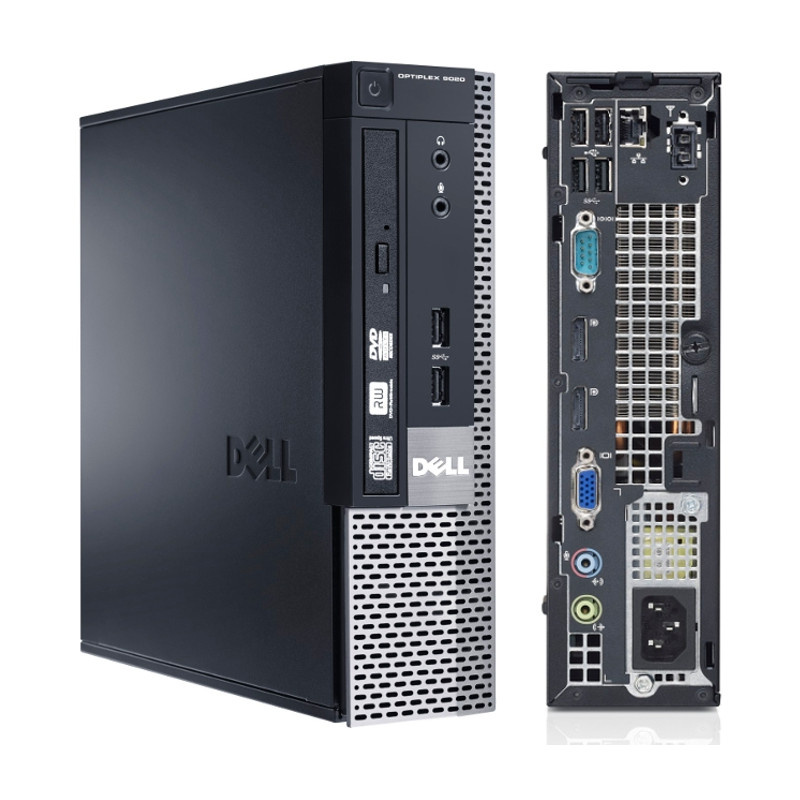
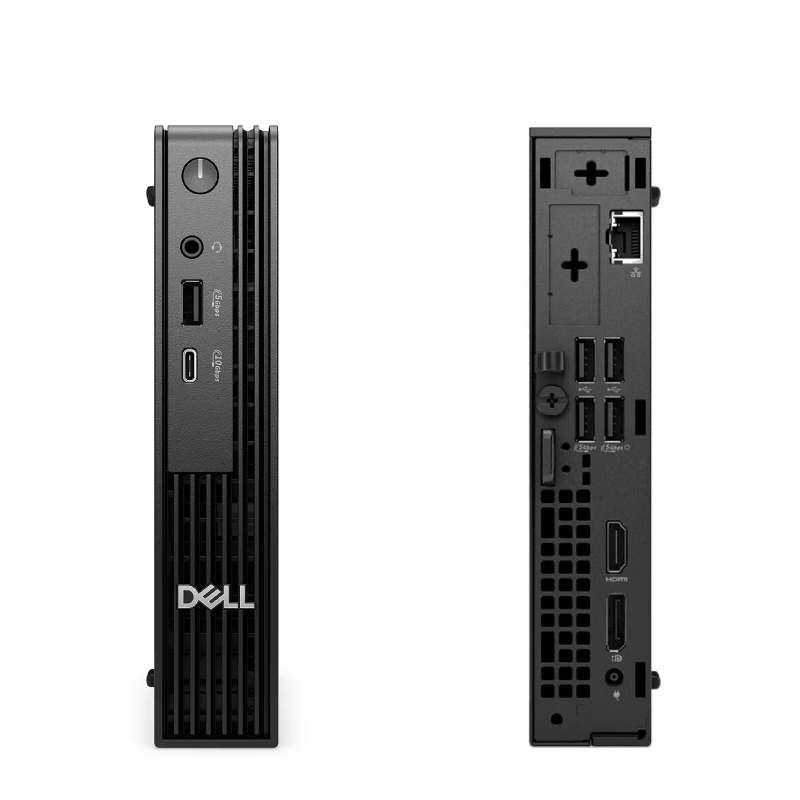
Differences between Dell OptiPlex 9020 USFF and Dell Pro Micro QCM1250
If you are looking for a more modern desktop, then you should go with the Dell Pro Micro QCM1250 which was released in 2025. The Dell OptiPlex 9020 USFF is older and entered production in 2013.
If you are looking for the smaller form factor the Dell Pro Micro QCM1250 is the right one for you. It is smaller than the Dell OptiPlex 9020 USFF and will fit more easily under your desk.
Processor
Usually the newer the generation of the CPU, the better the performance and efficiency is. If your budget allows it, you should go with the Dell Pro Micro QCM1250 as it is running a newer generation CPU. This is not to say that Dell OptiPlex 9020 USFF is bad - it can still run some powerful CPUs, albeit being an older generation.
Memory
Both models have have equal amount of ram slots (2 RAM). Usually two RAM slots are more than enough for most cases. However, the count should be taken into account when planning how much and what combination of RAM you are going to need for your system.
The Dell Pro Micro QCM1250 is using the faster 6400 MT/s RAM. The Dell OptiPlex 9020 USFF is slower by supporting RAM speeds of up to 1600 MT/s. Additionally, if you will be needing a lot of RAM, better go for the Dell Pro Micro QCM1250 as it has the ability to run 64 GB of RAM. The Dell OptiPlex 9020 USFF can do a bit less at max 16 GB. Most of the times, this should be sufficient for the majority of users.
Ports
Both models have the same amount of USB ports for total count of 6. If this is not enough, using a USB hub is always a viable option. What is nice about the Dell Pro Micro QCM1250, is that it has 1 USB 3.1 port(s) which allows transfer of up to 10Gb/s. Unfortunately, the Dell OptiPlex 9020 USFF has no such port, thus restricting your transfer speeds significantly. For people who want to use external drives on regular basis, this might be an issue.
DisplayPort is crucial for any desktop machine. It is good to see that both models are featuring DisplayPorts. However, the Dell OptiPlex 9020 USFF comes with 2 ports, while the Dell Pro Micro QCM1250 has only 1. If you are planning to use multiple monitors, the Dell OptiPlex 9020 USFF is the better choice.
The Dell Pro Micro QCM1250 comes with an HDMI port, while the Dell OptiPlex 9020 USFF does not support the interface. Of course missing HDMI port is something that can be easily fixed with a good adapter (e.g. DisplayPort to HDMI).
SATA ports are placed on the system board and it is where you connect your HDD, SSD and Optical Disk Drives. More SATA slots will allow you to have more drives running at the same time. In this regard the Dell OptiPlex 9020 USFF is better equipped as it comes with 2 SATA slot(s), while the Dell Pro Micro QCM1250 has 0 slot(s).
An M.2 SSD can be several times faster than a SATA one. Thus, we are happy to see that both models support the M.2 interface. However, the Dell Pro Micro QCM1250 has 1 M.2 slots while the Dell OptiPlex 9020 USFF comes with just 1.
Make sure that the available M.2 slot supports the PCIe (also called NVMe) interface. This is important as there are M.2 slots which support only the inferior SATA III interface. For comparison, the SATA III interface has max speeds of 6Gb/s, while the PCIe 3.0 x4 will support speeds up to 32Gb/s!
Power Supply
Having a Power Supply Unit with high power rating is important, if you are going to use components which require extra power. The Dell Pro Micro QCM1250 comes with a decent 90 Watt PSU, but the Dell OptiPlex 9020 USFF has a more powerful one rated at 200 Watts. Choosing either one depends on your specific requirements and use case. Also don't forget that some models might have more than one PSU option - try to always get the most powerful one, especially if you plan to upgrade to a powerful GPU.
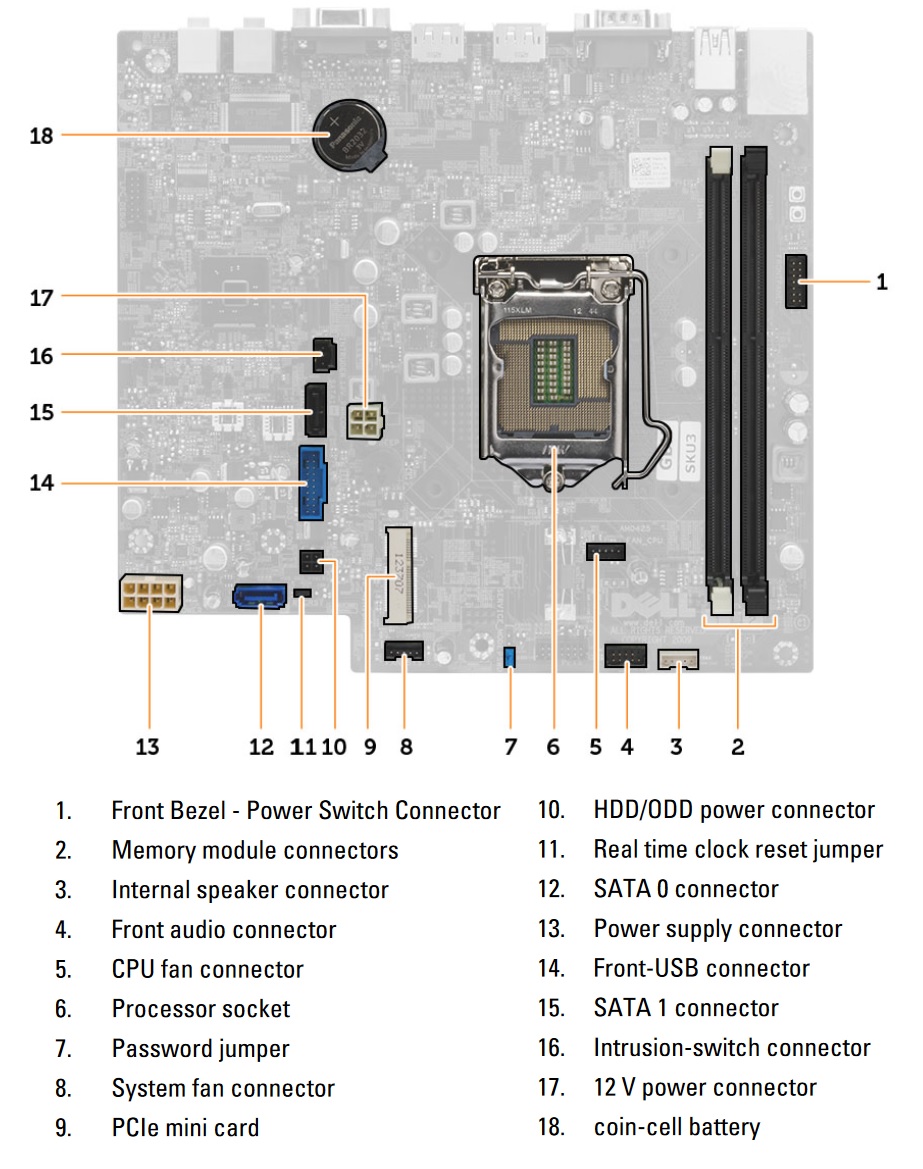
Motherboard